Page 4 of 11
MI9.4-6 | Oncogenic Microbes, Emerging Infections & National Health Programs — SDL Guide
Learning Objectives
- Describe the etiopathogenesis of infective causes of malignancy and explain the mechanisms used by oncogenic viruses in the development of virus-associated malignancies along with their preventive measures
- Describe the concept of emerging and re-emerging infectious diseases, explain the factors responsible for their emergence and re-emergence, and describe prevention and control strategies
- Describe the National Health Programs in the prevention of common infectious diseases and discuss the National Reference Centres for disease diagnosis and control
INSTRUCTIONS
Approximately 15–20% of cancers worldwide have an infectious aetiology. Several of India's leading public health programmes directly target infectious agents — vaccines for HBV, HPV, JE; elimination targets for polio, leprosy, TB, kala-azar. This SDL connects virology and epidemiology to public health practice.
References
- Ananthanarayan & Paniker's Textbook of Microbiology, Ch 69 (HBV), Ch 74 (HPV, EBV, KSHV), Ch 80 (Emerging infections); Park's Textbook of Preventive and Social Medicine, Ch on National Health Programs (textbook)
Version 2.0 | NMC CBUC 2024
CLINICAL SCENARIO
A 45-year-old woman from a tribal community in Jharkhand is diagnosed with carcinoma of the uterine cervix at stage IIB. On further questioning, she reports having had 4–5 sexual partners and never having received a vaccine. Her 14-year-old daughter is still unvaccinated. What is the infectious aetiology of her cancer? Could it have been prevented? What national programme is now addressing this gap?
WHY THIS MATTERS
In India, cervical cancer (HPV-driven) is the second most common cancer in women, causing ~67,000 deaths annually. Hepatocellular carcinoma (HBV/HCV-driven) is the fifth most common cancer. Understanding oncogenic microbes is not just virology — it is cancer prevention. Similarly, COVID-19 and Nipah reminded us that emerging infections can emerge anywhere, anytime. The NMC expects you to connect microbiology to national programmes that prevent these diseases.
RECALL
Before proceeding, recall: (1) The general mechanisms of viral carcinogenesis: integration of viral DNA → insertional mutagenesis; viral oncoproteins inactivating tumour suppressor genes (p53, Rb). (2) The Universal Immunisation Programme (UIP) of India — currently includes: BCG, OPV, IPV, Hepatitis B, DPT, Hib, PCV, MMR, JE, Rotavirus, HPV (newly added). (3) Emerging infection = a disease whose incidence in humans has increased in the past 2 decades or threatens to increase in the near future.
Oncogenic Viruses — Mechanisms and Associated Malignancies
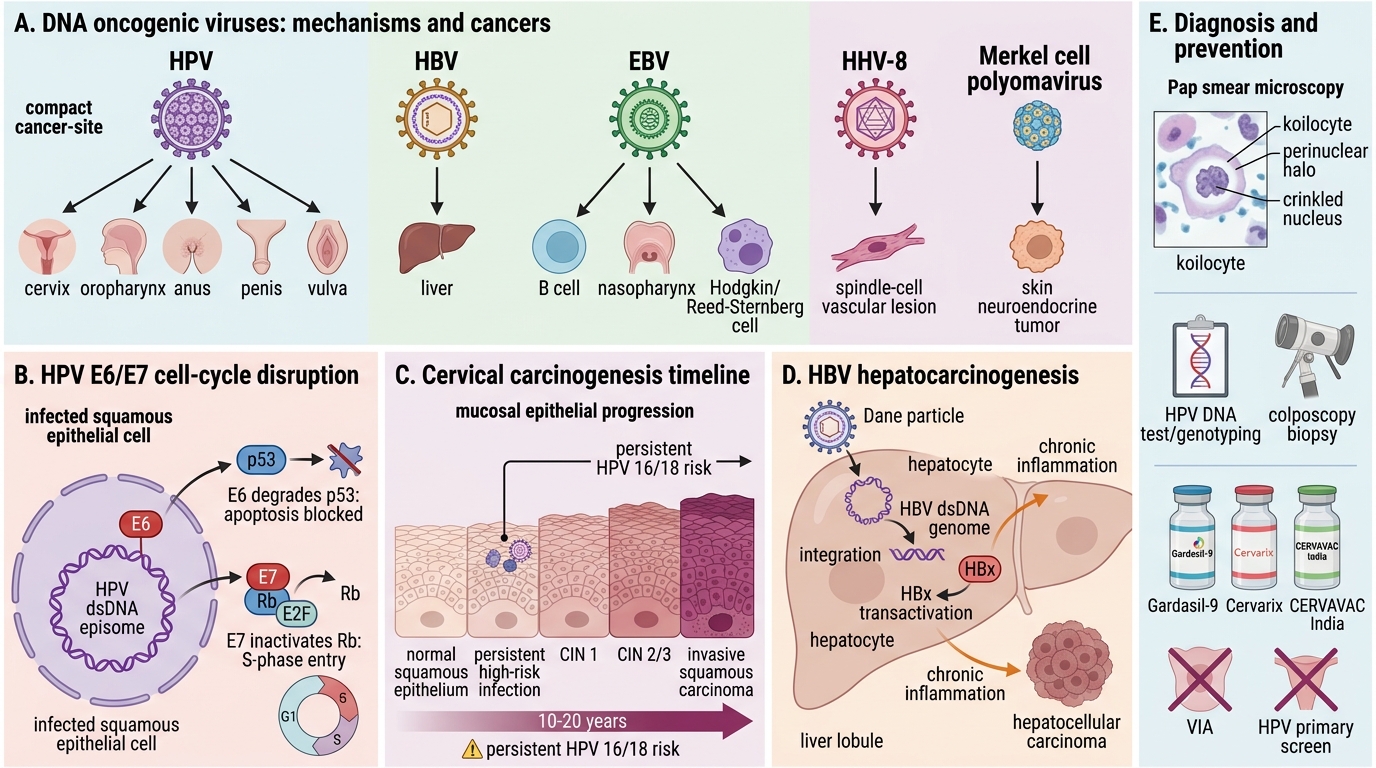
Oncogenic DNA Viruses: Mechanisms and Malignancies
Overview — DNA Oncogenic Viruses:
1. Human Papillomavirus (HPV)
- Non-enveloped dsDNA; >200 serotypes; sexually transmitted
- High-risk serotypes: HPV 16 (most oncogenic), HPV 18 → cervical, oropharyngeal, anal, penile, vulvar cancers
- Oncoproteins E6 and E7:
- E6 — binds and degrades p53 (tumour suppressor, 'guardian of the genome') → prevents apoptosis
- E7 — binds and inactivates Rb (retinoblastoma protein) → releases E2F transcription factor → uncontrolled cell cycle entry
- Cervical carcinogenesis: persistent HPV → cervical intraepithelial neoplasia (CIN) → invasive carcinoma (10–20 year timeline)
- Diagnosis of HPV-associated disease: Pap smear (koilocytes — perinuclear halo, crinkled nucleus); HPV DNA test (genotyping); colposcopy + biopsy
- Prevention:
- Gardasil-9 (9-valent — HPV 6,11,16,18,31,33,45,52,58) and Cervarix (bivalent — 16,18)
- INDIA: CERVAVAC (India's first HPV vaccine, made by Serum Institute) — approved 2023; national immunisation programme for girls 9–14 years under the UIP (2024)
- Cervical cancer screening: VIA (Visual Inspection with Acetic Acid) in primary health care; HPV testing as primary screen
2. Hepatitis B Virus (HBV)
- Partially dsDNA, hepadnavirus; Dane particle is the complete virion
- Chronic HBV infection → hepatocellular carcinoma (HCC) via: (a) viral DNA integration → insertional mutagenesis; (b) HBx protein — transactivates cellular oncogenes; (c) chronic inflammation → cirrhosis → HCC
- HBsAg — surface antigen (marker of infection); HBeAg — active replication marker (high infectivity)
- Prevention: HBV vaccine (recombinant HBsAg) — 3 doses in UIP (birth, 6 weeks, 10 weeks, 14 weeks for combination); birth dose within 24 hr
- Antiviral: Tenofovir/Entecavir for chronic HBV
3. Epstein-Barr Virus (EBV/HHV-4)
- Infects B lymphocytes via CD21 (CR2) receptor; establishes latency
- Associated malignancies:
- Burkitt's lymphoma — endemic form in Africa (8;14 translocation, c-MYC overexpression); jaw tumour in children
- Nasopharyngeal carcinoma (NPC) — EBER+ in virtually all cases; high incidence in South-East Asia
- Hodgkin's lymphoma (EBV+ in ~30–40% cases)
- Post-transplant lymphoproliferative disorder (PTLD) in immunosuppressed
- EBV latency proteins: LMP-1 (mimics CD40, constitutive NF-κB activation); EBNA-2 (transactivator)
4. Kaposi's Sarcoma Herpesvirus (KSHV/HHV-8)
- Associated with Kaposi's sarcoma (HIV-associated, vascular tumour); Primary Effusion Lymphoma; Multicentric Castleman's disease
- Mechanisms: viral GPCR → PI3K/Akt → cell proliferation; vIL-6 → angiogenesis
5. Human T-lymphotropic Virus (HTLV-1)
- Deltaretrovirus; RNA virus; sexually transmitted + blood; vertical (breastfeeding)
- Associated with Adult T-cell Leukaemia/Lymphoma (ATLL) — via Tax oncoproteins activating NF-κB
- Endemic: Japan, Caribbean, southern India (rare)

HPV E6 and E7 in Cervical Carcinogenesis
RNA Oncogenic Virus:
Hepatitis C Virus (HCV):
- Flavivirus; positive-sense ssRNA; no vaccine available
- Chronic hepatitis → fibrosis → cirrhosis → HCC
- Carcinogenesis: chronic inflammation, NS5A/NS3 interact with p53, oxidative stress
- Diagnosis: Anti-HCV ELISA → confirmatory HCV RNA PCR (viral load); genotyping
- Treatment: DAAs (Direct-Acting Antivirals) — pan-genotypic sofosbuvir + velpatasvir; >95% cure rates
SELF-CHECK
The HPV oncoprotein E7 promotes cervical carcinogenesis primarily by:
A. Activating p53 to accelerate apoptosis
B. Binding and inactivating the Rb tumour suppressor protein
C. Inserting HPV DNA into c-MYC locus
D. Stimulating CD21 receptor on B cells
Reveal Answer
Answer: B. Binding and inactivating the Rb tumour suppressor protein
HPV E7 binds and inactivates the retinoblastoma (Rb) tumour suppressor protein. Normally, Rb sequesters E2F transcription factors, preventing cell cycle entry. E7-mediated Rb inactivation releases E2F, driving uncontrolled G1→S phase progression. E6 inactivates p53 (not E7). c-MYC translocation is EBV/Burkitt's. CD21 is the EBV receptor.
Helicobacter pylori — Bacterial Carcinogen
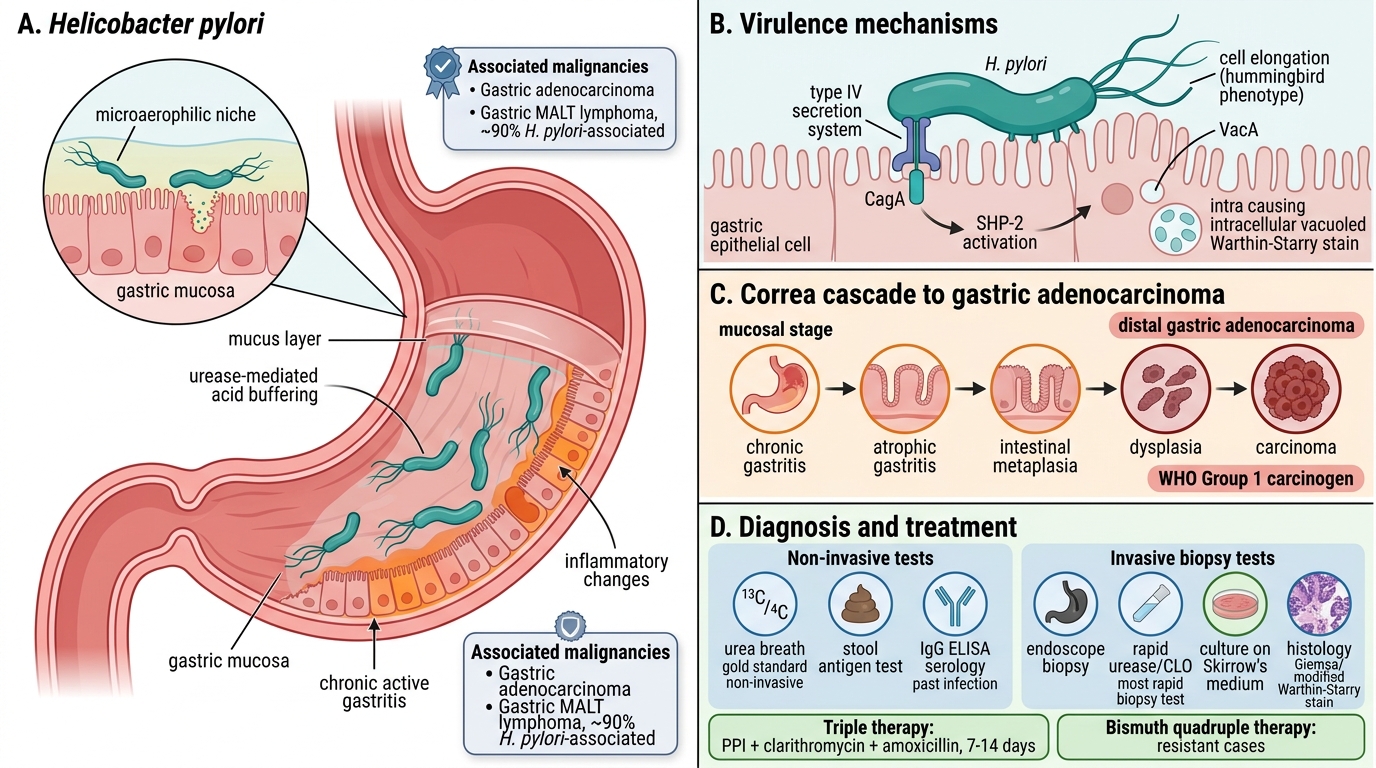
Helicobacter pylori as a Bacterial Carcinogen
Helicobacter pylori — Gram-negative, spiral/helical rod; microaerophilic; urease-producing (buffers gastric acid)
Associated malignancies:
- Gastric adenocarcinoma — H. pylori is the strongest risk factor for distal gastric cancer; WHO classifies it as Group 1 carcinogen
- MALT lymphoma (MALToma) — B-cell lymphoma of gastric mucosa; 90% caused by H. pylori
Carcinogenesis:
- CagA (cytotoxin-associated gene A) protein — injected via type IV secretion system into gastric epithelial cells; activates SHP-2 phosphatase → hummingbird phenotype, proliferation
- VacA (vacuolating cytotoxin) — induces vacuolar degeneration of gastric epithelium
- Chronic gastritis → atrophic gastritis → intestinal metaplasia → dysplasia → carcinoma (Correa cascade)
Lab diagnosis:
- Non-invasive: Urea breath test (13C/14C — gold standard non-invasive); stool antigen test; serology (IgG ELISA — past infection)
- Invasive (biopsy): Rapid urease test (CLO test) — most rapid from endoscopic biopsy; culture on Skirrow's medium; histology (Giemsa/modified Warthin-Starry stain)
Treatment: Triple therapy — PPI + clarithromycin + amoxicillin (7–14 days); bismuth quadruple therapy for resistant cases
Emerging and Re-emerging Infectious Diseases
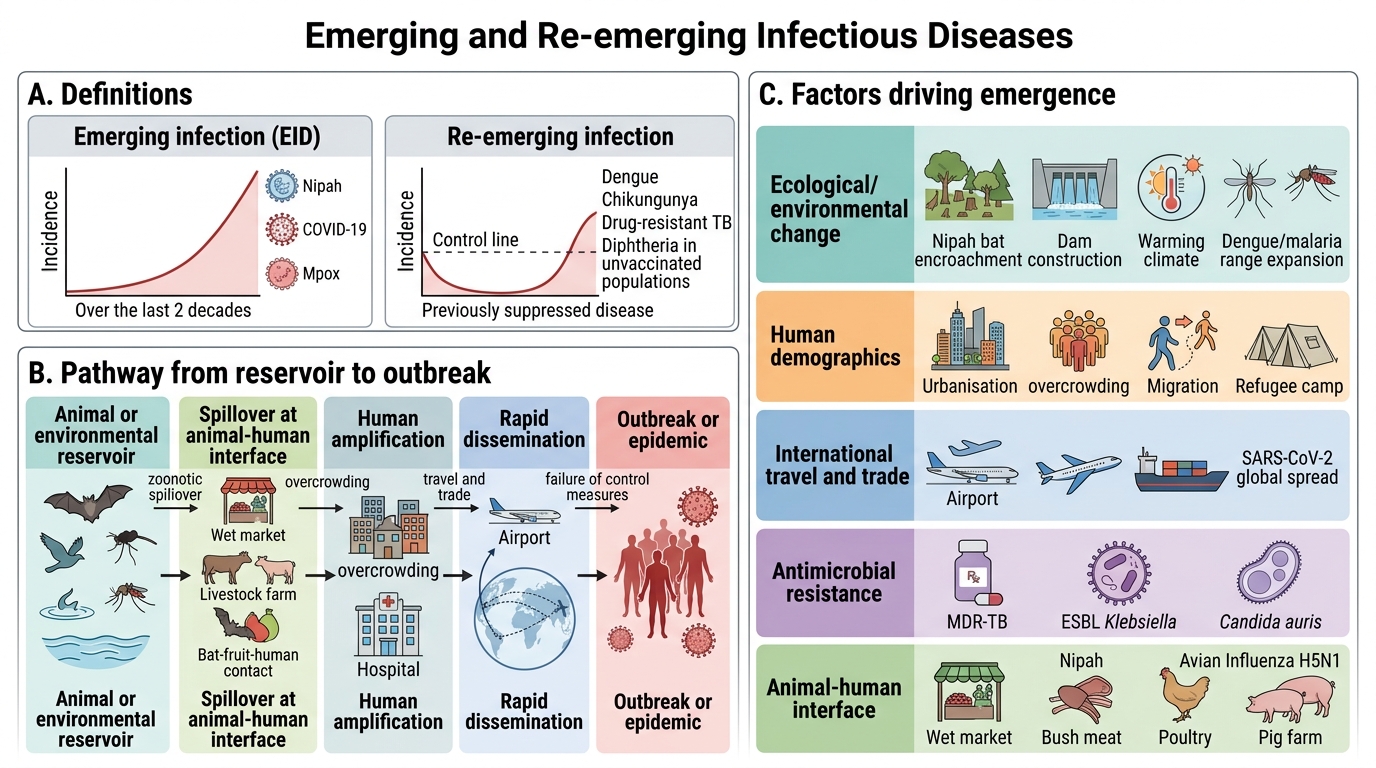
Emerging and Re-emerging Infectious Diseases
Definitions:
- Emerging infection (EID): An infection whose incidence in humans has increased in the past 2 decades OR threatens to increase in the near future (e.g., Nipah, COVID-19, Mpox)
- Re-emerging infection: A previously controlled disease returning due to breakdown of control measures or pathogen evolution (e.g., Dengue, Chikungunya, Drug-resistant TB, Diphtheria in unvaccinated populations)
Factors driving emergence:
| Factor | Examples |
|---|---|
| Ecological/environmental change | Deforestation (Nipah bat encroachment), dam construction, climate change (Dengue/malaria range expansion) |
| Human demographics | Urbanisation, overcrowding, migration, refugee camps |
| International travel and trade | SARS-CoV-2 global spread, COVID import via airports |
| Antimicrobial resistance | MDR-TB, ESBL Klebsiella, Candida auris |
| Animal-human interface | Wet markets, bush meat, livestock farming (Nipah, Avian Influenza H5N1) |
| Failure of public health | Vaccine hesitancy (measles resurgence), poor vector control (Dengue) |
| Viral evolution | Antigenic shift (influenza pandemic), mutation (SARS-CoV-2 variants) |
Recent EIDs of significance to India:
- COVID-19 (SARS-CoV-2): Beta-CoV; ACE-2 receptor; RT-PCR gold standard; antigen tests for rapid screening; lessons for One Health surveillance
- Nipah (Kerala 2018, 2019, 2023): Bat → human; no vaccine; contact tracing + strict isolation; high CFR
- Dengue/Chikungunya: Aedes aegypti; expanding to new areas; no specific antiviral; vector control (larval source reduction)
- Mpox (Monkeypox): Orthopoxvirus; multi-country outbreak 2022; reported cases in India; sexual transmission in 2022 outbreak; Smallpox vaccine provides cross-protection
- Candida auris: Multi-drug resistant yeast; hospital outbreaks; misidentified by conventional methods (requires MALDI-TOF)
IHR (International Health Regulations 2005): WHO's legal framework for surveillance and response to Public Health Emergencies of International Concern (PHEIC)
CLINICAL PEARL
One Health Framework — The concept that human health, animal health and environmental health are interconnected. Emerging infections (Nipah, H5N1, COVID-19) demonstrate that human health cannot be protected without monitoring animal populations and ecosystems. NMC increasingly expects graduates to understand this framework as part of the public health curriculum.
National Health Programs for Infectious Diseases (MI9.6)
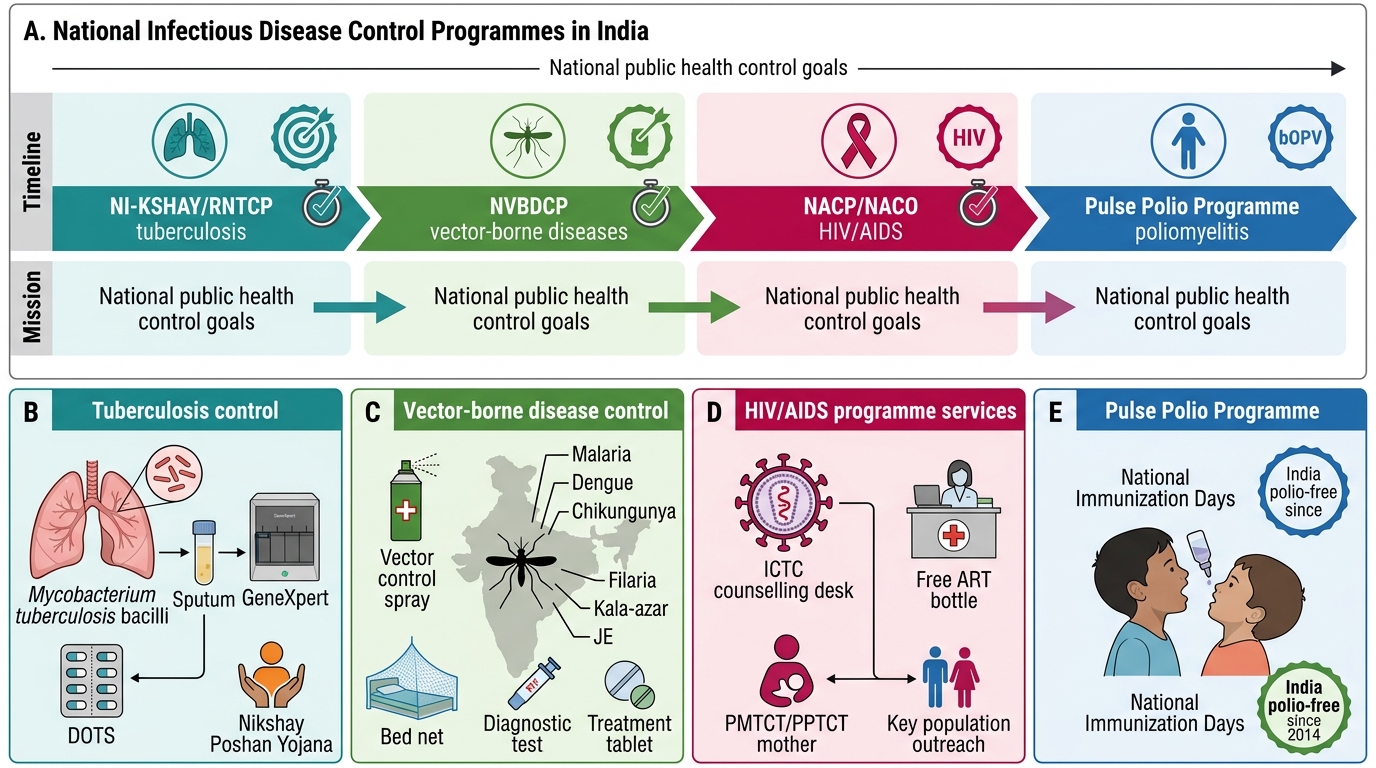
National Health Programmes for Infectious Diseases
Key programmes and their targets:
| Programme | Disease | Key Intervention | Status (2024) |
|---|---|---|---|
| NI-KSHAY (RNTCP) | Tuberculosis | DOTS, GeneXpert, Nikshay Poshan Yojana | Elimination by 2025 (ahead of SDG 2030) |
| NVBDCP | Malaria, Dengue, Chikungunya, Filaria, Kala-azar, JE | Vector control, diagnosis, treatment | Kala-azar elimination target: 2023 (<1/10,000) |
| NACP (NACO) | HIV/AIDS | Free ART, ICTC, PMTCT, PPTCT, key population outreach | Decline in new infections |
| Pulse Polio Programme | Poliomyelitis | bOPV NIDs; India polio-free since 2014 | Wild poliovirus eradicated |
| National Leprosy Eradication Programme (NLEP) | Leprosy | MDT (dapsone + rifampicin + clofazimine), stigma reduction | <1/10,000 achieved nationally |
| IDSP (Integrated Disease Surveillance Programme) | All EIDs | P, L, S forms for weekly surveillance; epidemic intelligence | All 36 states/UTs |
| UIP | Vaccine-preventable diseases | 12+ vaccines; Mission Indradhanush for catch-up | HPV vaccine added 2024 |
| NVHCP (National Viral Hepatitis Control Programme) | HBV, HCV | Free testing + treatment (DAA for HCV); HBV birth dose | HCV elimination by 2030 |
National Reference Centres (NRCs) and Reference Laboratories:
| Disease | Reference Centre |
|---|---|
| TB/MDR-TB | National Tuberculosis Institute (NTI), Bengaluru; NIRT, Chennai |
| HIV | National AIDS Research Institute (NARI), Pune |
| Influenza/Emerging viruses | NIV (National Institute of Virology), Pune |
| Cholera/Enteric diseases | NICED, Kolkata |
| Plague | National Institute of Communicable Diseases (NICD), Delhi (now NCDC) |
| Rabies | Central Research Institute (CRI), Kasauli |
| Malaria | NIMR (National Institute of Malaria Research), Delhi |
| Cholera/Enteric/Encephalitis | NCDC, Delhi (apex national centre) |
SELF-CHECK
India achieved polio-free status in 2014. Which of the following best describes the key strategy that made this possible?
A. IPV-only national immunisation campaign targeting all children 0–15 years
B. Pulse Polio Programme using bivalent OPV administered during National Immunisation Days
C. School-based serosurvey followed by targeted mop-up vaccination
D. Vector control and sanitation improvement in high-risk states
Reveal Answer
Answer: B. Pulse Polio Programme using bivalent OPV administered during National Immunisation Days
India's Pulse Polio Programme used bivalent OPV (covering types 1 and 3) administered during National Immunisation Days (NIDs) targeting all children <5 years, regardless of prior vaccination status. Sub-national and mop-up rounds supplemented NIDs in high-risk areas. IPV was introduced into routine UIP from 2015 as a post-eradication strategy, but OPV NIDs were the cornerstone that achieved eradication.
REFLECT
Consider the Nipah virus outbreaks in Kerala (2018, 2019, 2023). Using the framework of factors driving EIDs, which specific factors were responsible for these outbreaks? What IDSP mechanisms were activated? What is the role of NIV Pune in containing future outbreaks? How does the One Health framework apply here?
KEY TAKEAWAYS
Oncogenic microbes account for 15–20% of global cancer burden. HPV 16/18 cause cervical cancer via E6 (degrades p53) and E7 (inactivates Rb) — preventable by CERVAVAC vaccine now in India's UIP. HBV causes HCC via HBx protein — prevented by birth-dose HBV vaccine. EBV drives Burkitt's lymphoma and NPC; H. pylori causes gastric carcinoma and MALToma (eradication therapy reverses early MALToma). Emerging infections arise at the intersection of ecological disruption, animal-human interface, globalisation, and AMR — COVID-19, Nipah, CCHF, Candida auris illustrate this. India's response framework spans NI-KSHAY (TB elimination), NACP (HIV), NVBDCP (vector-borne), NVHCP (hepatitis), UIP (vaccine-preventable diseases) and IDSP (surveillance). Reference centres (NIV Pune, NCDC Delhi, NTI Bengaluru) anchor laboratory diagnosis of emerging threats nationally.